Ask why a child left school and the answer is almost never “the fees”. Fees are the thing everyone expects, so households plan for them, borrow for them, and sell something to meet them. What ends a child’s term is usually smaller than that, and arrives without warning.
A pair of shoes. An exercise book for a subject that has just started. A mathematical set. A uniform that fitted in February and does not in September. None of these items is expensive on its own. Together, arriving in the same fortnight, they are the difference between a child walking to school and a child being sent home at the gate.
What we hand over, and why that list
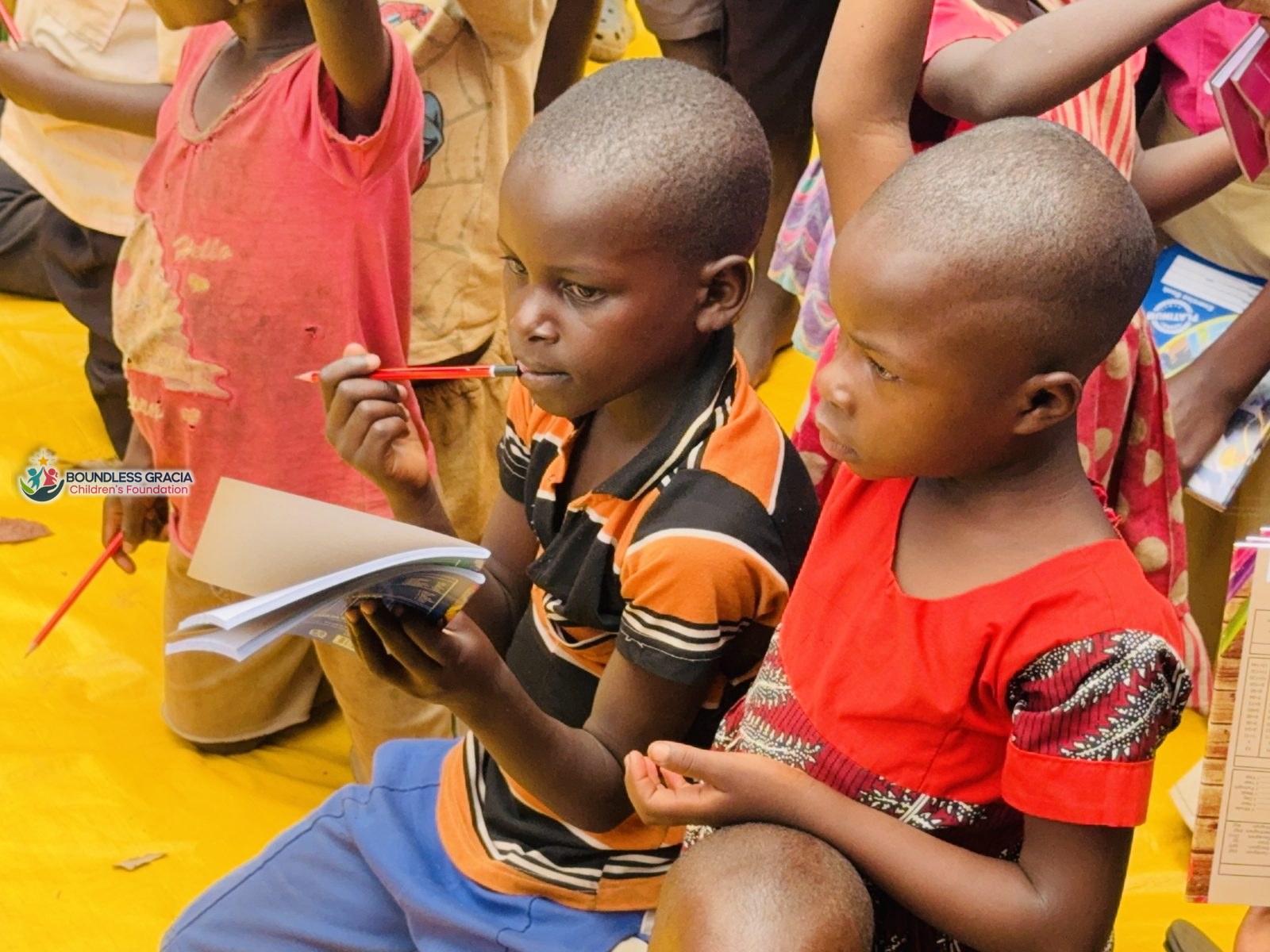
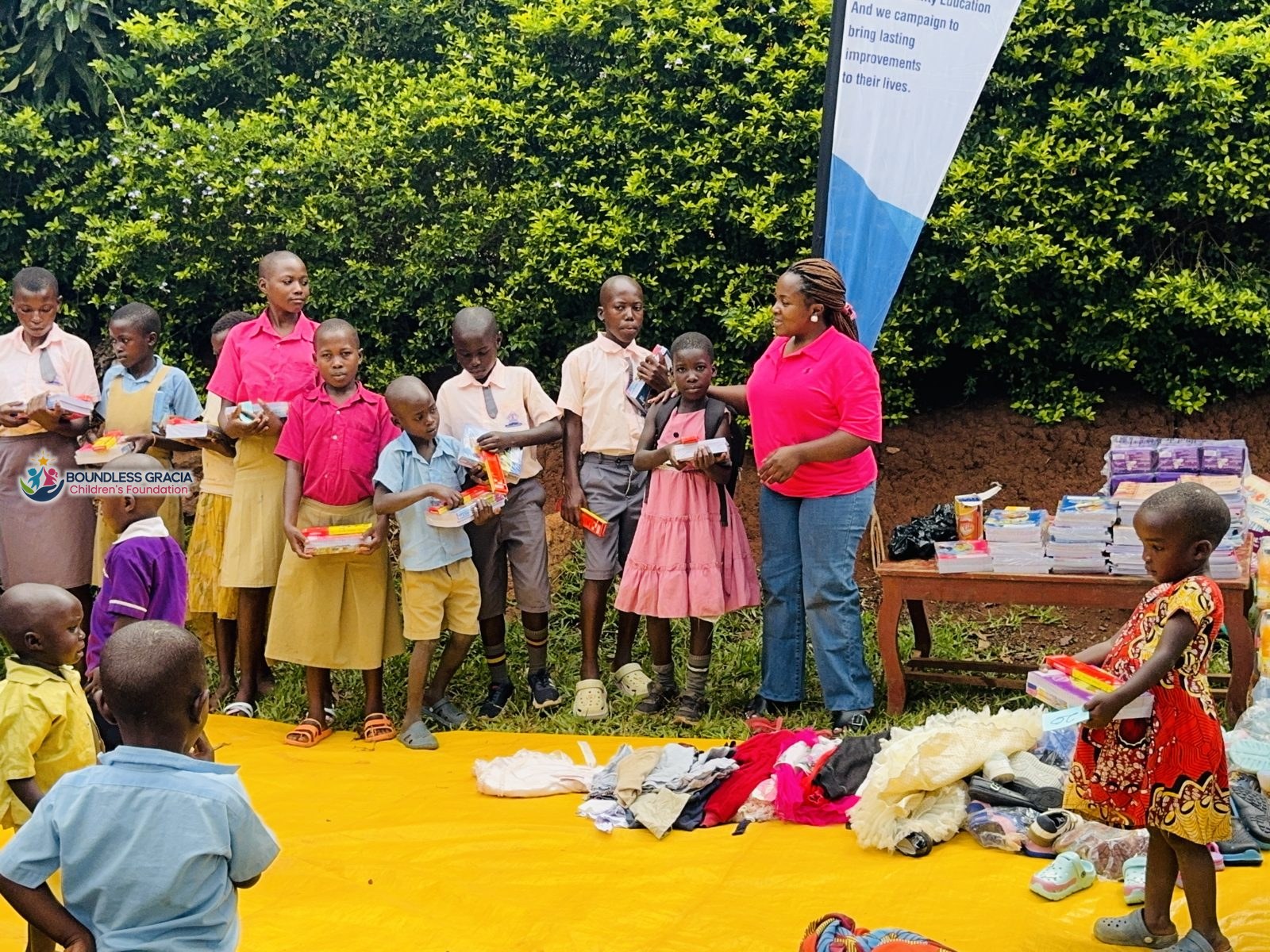
At a scholastic materials distribution, the pile in front of each child looks modest: exercise books, pens and pencils, a mathematical set, a uniform and a pair of shoes. The contents are not chosen by what is cheap to buy in bulk. They are chosen from what schools in this sub-county actually require a family to supply, which is a different list from the one a donor two thousand miles away would guess at.
We buy against that list, and we buy it in the term the school asks for it. Materials bought six months early are materials outgrown, lost or sold — and a child who has already been sent home once is less likely to try again.
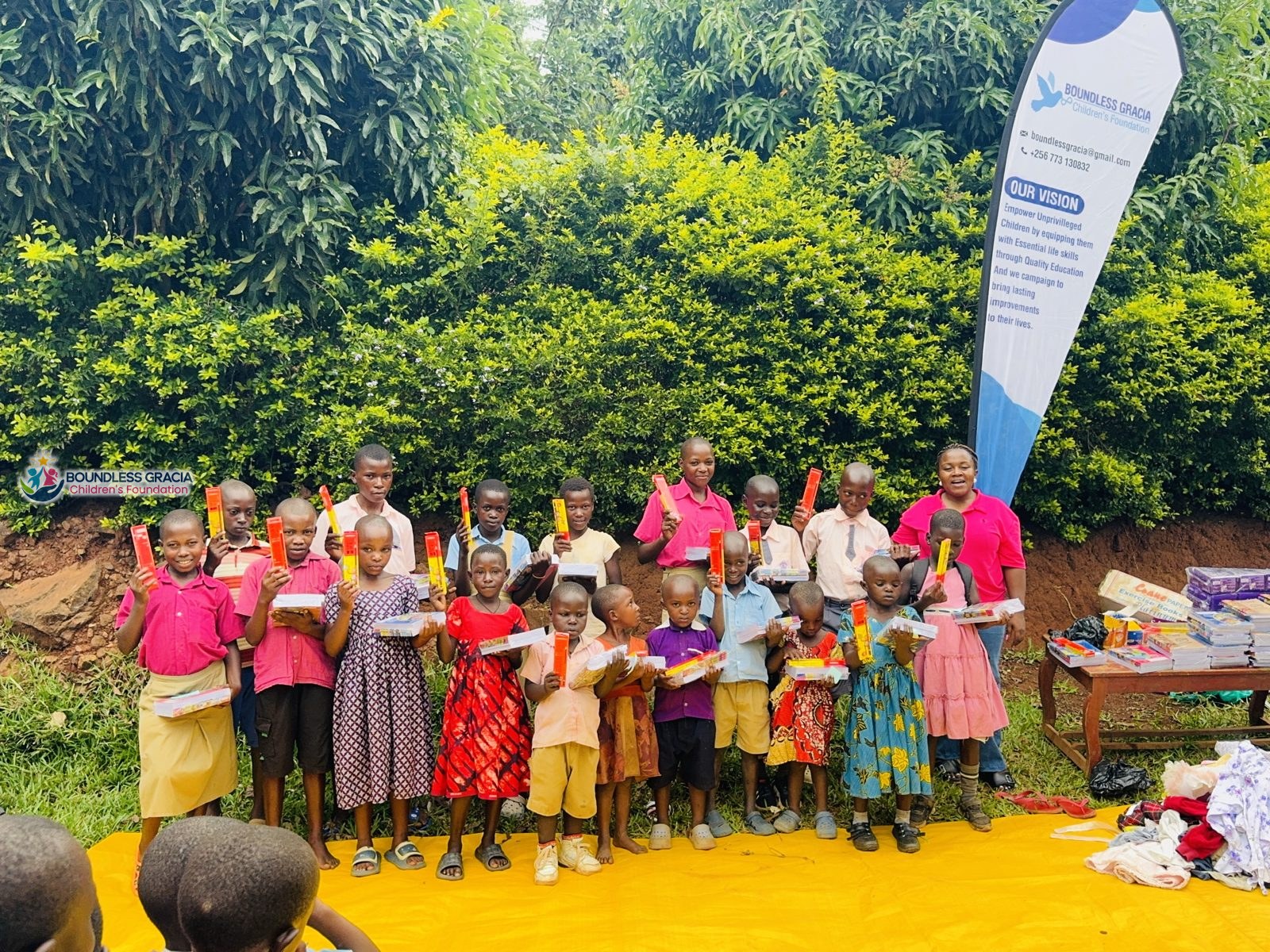
Why it is given through the school, not in cash
It would be simpler to hand a caregiver the money. We do not, for two reasons. The first is that a household under pressure has a dozen urgent claims on any cash that arrives, and a school shoe is rarely the most urgent of them — which is a judgement about arithmetic, not about character. The second is that buying centrally gets more for the same money, and a receipt for every item.
A uniform is not a nice-to-have. In practice, it is the gate.
What we count afterwards
The number of children at a distribution is an activity figure, and activity figures flatter everyone. The figure that matters is attendance in the weeks that follow, and whether the child is still on the register at the end of the level they entered. That is the indicator in our results framework: not children reached, but children who complete the level they enrolled in. Our target is 90% by 2030, measured against the baseline we are setting now.
It is a slower number to collect. It requires a case worker to visit the household, to know the teacher by name, and to notice in week three that a child has stopped appearing — rather than discovering it at the end of the year, when nothing can be done about it.
What it costs to stand behind one child
A monthly sponsorship covers fees and examination charges, scholastic materials, a uniform and shoes, and the case worker support that makes the rest of it hold. It is set up monthly so that it keeps pace with the school calendar, and so that a case worker can respond the week malaria keeps a child at home or a guardian’s income stops.
If that is a commitment you can make, the sponsorship page explains how matching works and what the termly report will tell you. If it is not, a one-off gift to the education fund buys the materials for a whole class and is coded and reported in exactly the same way.